

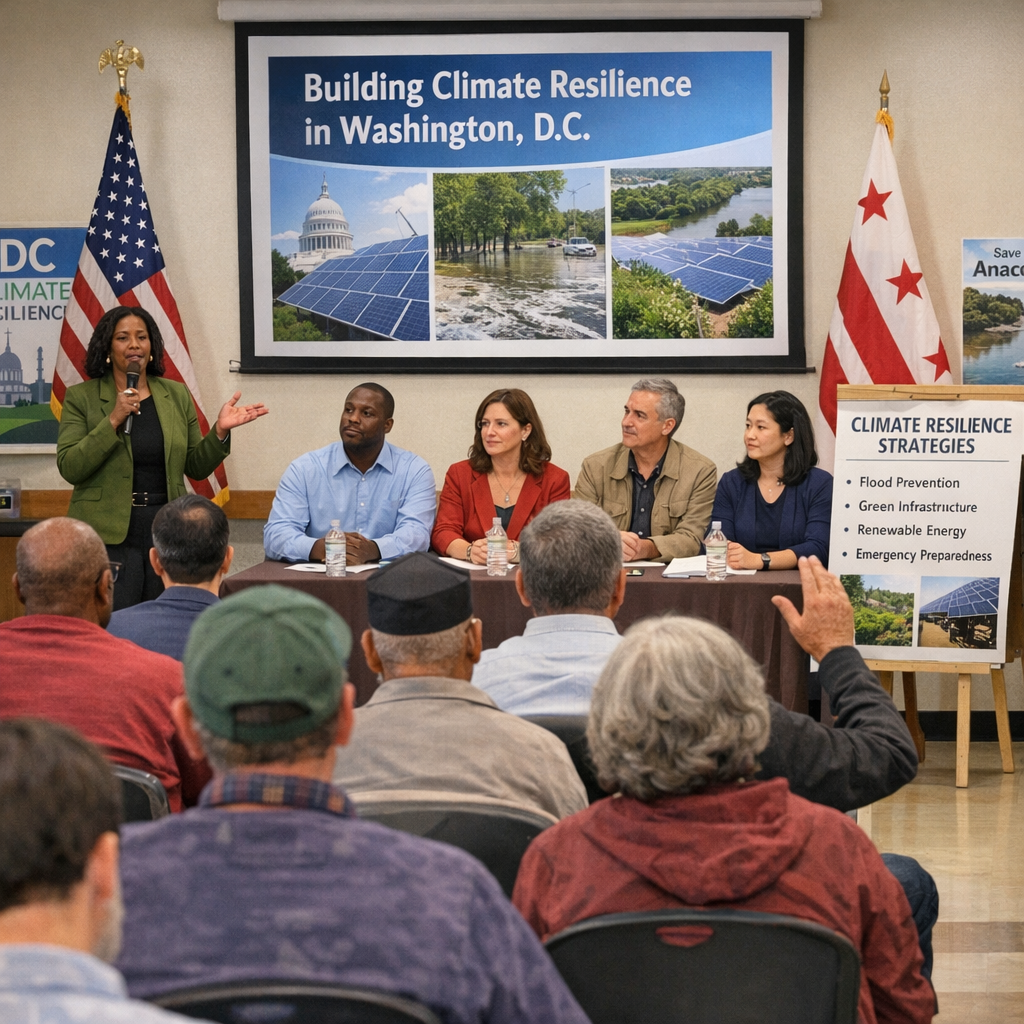
Washington, D.C. is already experiencing the tangible effects of climate change, including increased temperatures, more frequent heavy rainfall, and rising sea levels. In response, the city has implemented comprehensive strategies to enhance resilience and sustainability.
Understanding the Impact
Over the past 50 years, the District’s average annual temperature has risen by approximately 2°F. Projections indicate that by the 2080s, summer high temperatures could increase to between 93°F and 97°F, up from the historical average of 87°F. This warming trend is expected to result in more frequent and prolonged heatwaves, posing significant health risks, particularly to vulnerable populations. Additionally, the city has witnessed more intense rainfall events, leading to flash flooding and infrastructure challenges. For instance, in September 2020, a storm delivered nearly three inches of rain in just two hours, overwhelming the city’s drainage systems and causing widespread flooding. [Source: Climate Ready DC Plan]
Community-Led Resilience Initiatives
Recognizing these challenges, various neighborhoods have taken proactive steps to bolster their resilience. A notable example is the Ivy City Climate Resilience Strategy, developed in collaboration with the Department of Energy and Environment (DOEE). This initiative focuses on mitigating flooding and extreme heat through the implementation of blue-green infrastructure, enhanced stormwater management, and heat mitigation projects. The strategy also aims to provide additional community benefits, such as improved park spaces, increased greenery, and better air quality. [Source: Ivy City Climate Resilience Strategy]
Citywide Adaptation and Mitigation Efforts
At the municipal level, the District has adopted the Climate Ready DC Plan, which outlines comprehensive measures to prepare for climate impacts. The plan emphasizes both adaptation—preparing residents, infrastructure, and ecosystems for climate change—and mitigation—reducing greenhouse gas emissions to minimize future climate change. Key initiatives include the implementation of the Green Area Ratio, an environmental zoning regulation that sets standards for landscape and site design to reduce stormwater runoff and urban heat island effects. Additionally, the city has developed Resilience Design Guidelines to support climate-resilient planning and construction. [Source: Climate Ready DC Plan]
Looking Ahead
While significant progress has been made, ongoing efforts are essential to address the evolving challenges posed by climate change. Continued community engagement, investment in resilient infrastructure, and adherence to sustainable practices will be crucial in ensuring that Washington, D.C. remains a livable and thriving city for all residents.