

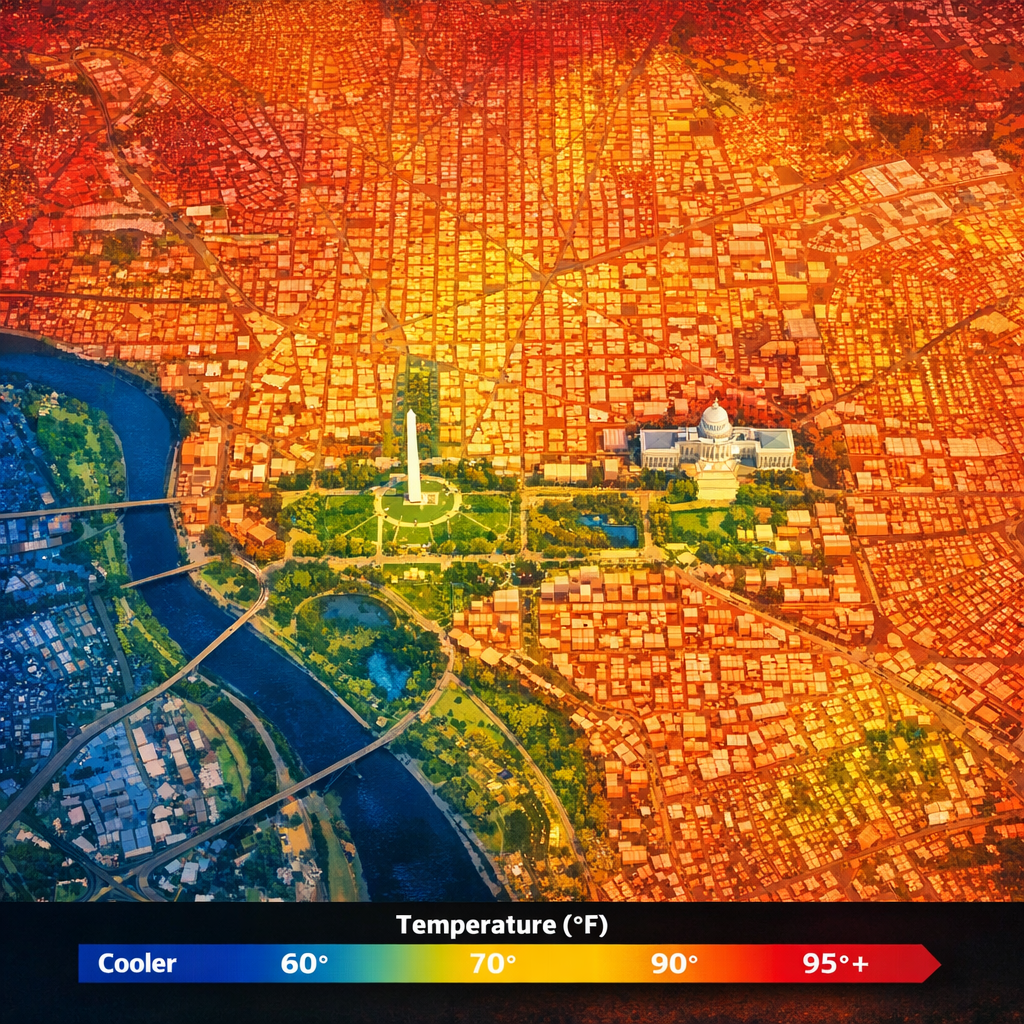
Washington D.C. experiences a phenomenon known as the Urban Heat Island (UHI) effect, where urban areas become significantly warmer than their rural surroundings. This temperature disparity arises from human activities and urban development patterns.
Causes of the Urban Heat Island Effect
Several factors contribute to the UHI effect in Washington D.C.:
- Reduced Natural Landscapes: The replacement of vegetation with buildings and roads diminishes the natural cooling effects of plants and trees.
- Urban Materials: Materials like asphalt and concrete absorb and retain heat more than natural surfaces, leading to higher temperatures.
- Urban Geometry: The design and layout of buildings can restrict airflow, trapping heat within city streets.
- Human Activities: Heat generated from vehicles, air conditioning units, and industrial processes adds to the overall warmth of urban areas.
Impacts on the Community
The UHI effect has several implications for Washington D.C. residents:
- Health Risks: Elevated temperatures can lead to heat-related illnesses, particularly among vulnerable populations.
- Increased Energy Consumption: Higher temperatures result in greater use of air conditioning, leading to increased energy demand and costs.
- Environmental Concerns: Warmer urban areas can affect local ecosystems and contribute to air pollution.
Mitigation Strategies
To combat the UHI effect, Washington D.C. has implemented several initiatives:
- Tree Planting Programs: Increasing the city’s tree canopy to provide shade and reduce surface temperatures.
- Green Roofs and Cool Roofs: Encouraging the installation of vegetation-covered or reflective roofs to decrease heat absorption.
- Urban Planning: Designing urban spaces to enhance airflow and incorporate more green spaces.
By understanding and addressing the factors contributing to the Urban Heat Island effect, Washington D.C. aims to create a more comfortable and sustainable environment for its residents.