

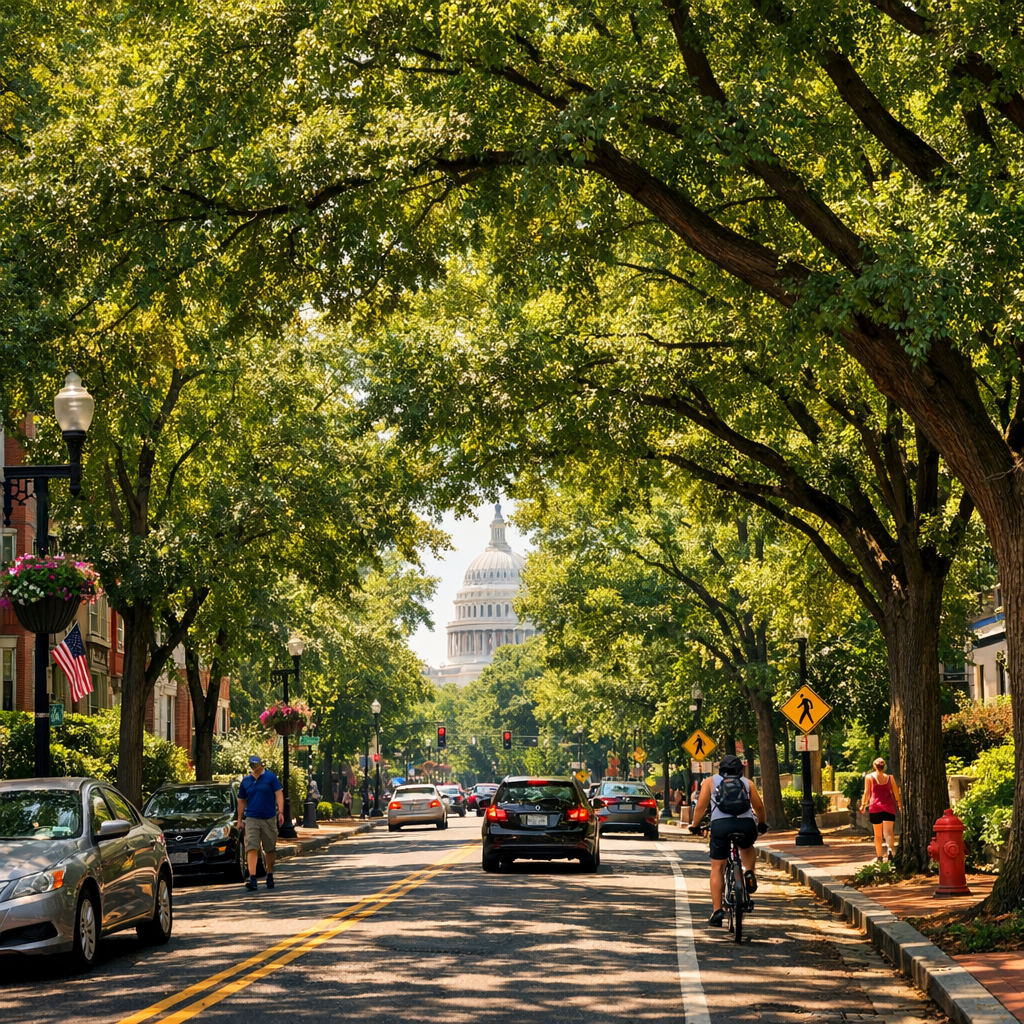
As someone who’s weather-obsessed and plants my sneakers in every season, I’ve noticed DC’s weather isn’t what it used to be. It’s not just that it’s hotter—but when, how, and how much things happen are changing too. Here’s what residents should know about DC’s evolving climate, with every season bearing some sign of transformation.
1. Warmer Temperatures and Heat Waves
Daily summer highs are creeping upward, and nights are growing warmer. The number of dangerously hot days—especially those over 90 °F—has gone up. Winters, meanwhile, are becoming milder: cold snaps happen, but deep freezes or extended periods below freezing are less common in many parts of the city and suburbs. The “urban heat island” effect—that’s DC’s concrete, asphalt, buildings, and fewer trees in some areas absorbing and radiating heat—amplifies this warming, particularly overnight.
2. More Rain, More Floods
Rainfall is staying fairly steady year-round, but when it comes, it’s often more intense. Heavy downpours are increasingly common, especially during spring and late summer. That means stormwater systems, low-lying streets, and older neighborhoods see more flooding with less warning. The Potomac River and some tidal areas also face more frequent high-tide flooding, thanks to rising sea levels.
3. Shifting Seasons and Spring Changes
We still get four seasons, but their timing and texture are shifting. Spring feels earlier—trees leaf out, flowers bloom, and pollens soar sooner. Summer stretches longer now, squeezing fall into a shorter window. Winters glance by, with fewer long stretches of snow and ice. This all affects how people plan their gardens, coats, weekend getaways, and even allergies.
4. Environmental Impacts & What’s Being Done
These weather shifts don’t just affect comfort — they carry real environmental consequences. Warmer winters can reduce snowpack and cold-dependent species while longer summers stress trees and waterways. The city acknowledges this in plans like Climate Ready DC 2.0, which lays out projections and strategies for adapting to hotter temperatures, heavier downpours, and rising tides. Local agencies are pushing for more green space, upgraded stormwater systems, and protections for vulnerable neighborhoods.
5. What You Can Do as a Resident
• Add trees or support tree planting in your neighborhood — more canopy helps cool streets and absorb rainwater.
• Be ready for intense storms: clean drains, check insulation, or have flood-safe plans for basements.
• Adjust routines: shake up gardening dates, schedule outdoor plans earlier or later to avoid heat peaks.
• Watch for high-tide or river flooding advisories if you live near Potomac or tidal zones.
• Stay informed about city planning and support climate adaptation projects.
The seasons may be changing shape, but knowing what to expect helps us stay grounded. DC’s weather has always been full of surprises—these days, they’re just a bit warmer, wetter, and more unpredictable.