

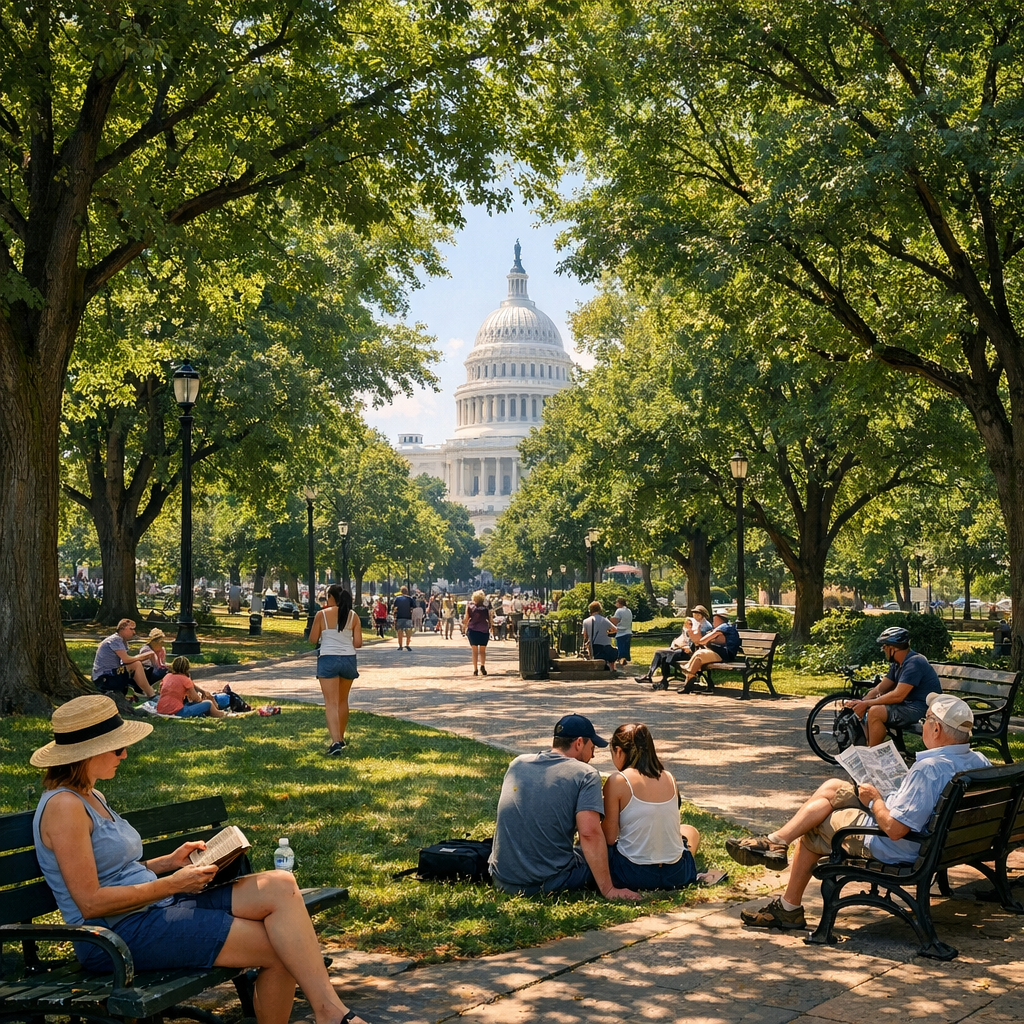
Washington D.C. is known for its vibrant urban landscape, but this development comes with a significant challenge: the Urban Heat Island (UHI) effect. This phenomenon results in urban areas experiencing higher temperatures than their rural surroundings, primarily due to human activities and infrastructure.
What Causes the Urban Heat Island Effect?
Several factors contribute to the UHI effect in cities like Washington D.C.:
- Reduced Natural Landscapes: The replacement of trees and vegetation with buildings and roads decreases the natural cooling effects of shade and evapotranspiration.
- Urban Materials: Materials such as asphalt and concrete absorb and retain heat more than natural surfaces, leading to increased temperatures.
- Urban Geometry: The design and density of buildings can trap heat, reducing airflow and preventing heat dissipation.
- Human Activities: Heat generated from vehicles, air conditioning units, and industrial processes adds to the overall temperature increase.
Impacts on Washington D.C.
The UHI effect has tangible consequences for the District:
- Health Risks: Elevated temperatures can lead to heat-related illnesses, particularly among vulnerable populations.
- Increased Energy Consumption: Higher temperatures result in greater use of air conditioning, leading to increased energy demand and costs.
- Environmental Degradation: The heat can exacerbate air pollution levels and negatively impact local ecosystems.
Mitigation Efforts and How Residents Can Help
To combat the UHI effect, Washington D.C. has implemented several initiatives:
- Tree Planting Programs: The District Department of Transportation (DDOT) has launched tree planting seasons to increase the city’s canopy cover, aiming for a 40% tree canopy by 2032. Residents can participate by requesting street trees or planting trees on private property.
- Green Roofs and Cool Roofs: Encouraging the installation of green roofs and reflective roofing materials helps reduce heat absorption.
- Urban Planning: Incorporating more green spaces and parks into urban design provides natural cooling areas.
As residents, we can contribute by:
- Planting trees and maintaining green spaces around our homes.
- Using energy-efficient appliances to reduce waste heat.
- Advocating for sustainable urban development policies.
By understanding the UHI effect and actively participating in mitigation efforts, we can work together to create a cooler, healthier Washington D.C. for everyone.